
School Music Program
A complete music program for schools with weekly classes, assessments, and end of term showcases for parents.
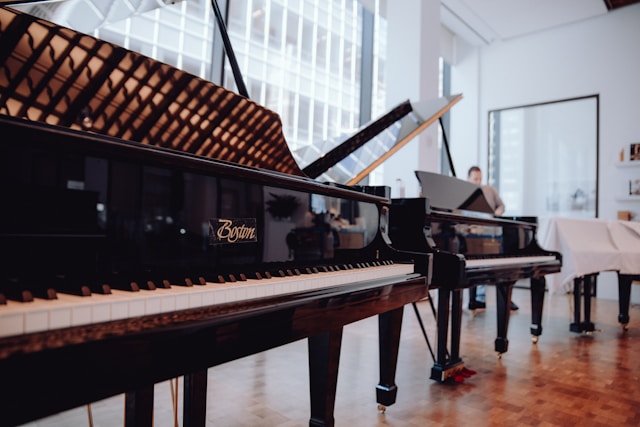
Program modules
Foundation
Rhythm, pitch, basic notation, and listening.
Instruments
Keyboard basics and ensemble playing.
Performance
Classroom recitals and annual showcase.
Why Music as an Extra-Curricular Activity is Important in Schools
Music is more than just entertainment — it is a powerful educational tool that helps students grow academically, emotionally, socially, and creatively. Including music as an extra-curricular activity in schools gives students an opportunity to explore their talents while developing important life skills that benefit them far beyond the classroom.
Enhances Creativity
Music encourages students to think creatively and express themselves freely. Whether singing, playing instruments, or composing melodies, students learn how to communicate emotions and ideas in unique ways. Creativity developed through music often improves problem-solving skills and innovative thinking in other subjects as well.
Improves Academics
Research has shown that students involved in music education often perform better academically. Learning music strengthens memory, concentration, listening ability, and pattern recognition. It can also improve mathematical understanding, language development, and reading skills.
Builds Confidence
Participating in performances, competitions, and group activities helps students gain confidence. Standing in front of an audience teaches them how to overcome fear and express themselves comfortably. As students improve, they develop a sense of achievement and self-belief.
Teaches Discipline
Learning music requires regular practice, dedication, and consistency. Students understand that improvement comes through effort and patience. These habits help them become more disciplined not only in music but also in academics and daily life.
Emotional Well-being
Music can have a calming and positive effect on students. It helps reduce stress, anxiety, and academic pressure by providing a healthy emotional outlet. Many students use music to relax, improve mood, and express feelings that may be difficult to communicate through words.
Encourages Teamwork
Group performances such as bands, choirs, and ensembles teach students the importance of cooperation and teamwork. They learn how to listen to others, work together toward a common goal, and respect different roles within a group.
Discovers Hidden Talents
Extra-curricular music programs allow students to explore interests beyond academics. Many students discover talents and passions they may not have recognized otherwise. Early exposure to music can even inspire future careers in performing arts, production, teaching, or creative industries.
Positive School Environment
Schools that encourage music activities often have more energetic and engaged students. Music programs bring excitement, cultural appreciation, and unity within the school community. Events such as concerts and performances create memorable experiences for students, teachers, and parents alike.
In summary: Music as an extra-curricular activity plays an essential role in the overall development of students. It nurtures creativity, improves academic abilities, strengthens emotional health, and teaches valuable life skills such as confidence, discipline, and teamwork. By supporting music education in schools, we help students become more balanced, expressive, and confident individuals prepared for the future.
The Impact of Music on Student Development
Research consistently shows that music education does far more than teach melodies — it rewires how young minds think, learn, and lead. Here is what studies reveal about students who learn music.
of children showed measurable gains in cognitive ability after just 20 days of structured music training, according to neuroscience research.
of top business leaders worldwide participated in organised arts or music activities during their school years.
Students with music education score nearly twice as high on standardised tests in reading and mathematics compared to peers without.
of today's primary school students will work in careers that do not yet exist — creative skills from music help them adapt and thrive.
Sharper Cognitive Abilities
When a student reads sheet music, keeps rhythm, and coordinates finger movements simultaneously, multiple areas of the brain activate at once. This kind of cross-brain training strengthens neural pathways that support memory recall, spatial reasoning, and analytical thinking — skills that carry over into science, mathematics, and language arts.
Language and Literacy Growth
Music training sharpens a student's ability to distinguish sounds, tones, and rhythmic patterns — the very same skills that underpin reading fluency, vocabulary acquisition, and spoken communication. Children who learn music often show accelerated language development and stronger comprehension in their academic subjects.
Emotional Intelligence
Music provides a safe space for students to process and express complex emotions. Learning to perform, accept feedback, and appreciate different musical styles cultivates empathy, resilience, and self-awareness — qualities that define strong emotional intelligence and healthier peer relationships.
Recharging the Mind
After a full day of rigorous academic work, music acts as a mental reset. Structured music sessions allow students to step away from textbook learning and engage a completely different part of their brain, so they return to core subjects with renewed focus, energy, and motivation.
Preparing Students for a Rapidly Changing World
The careers of tomorrow demand creative thinking, adaptability, and leadership — skills that textbooks alone cannot teach. Music education equips students with precisely these capabilities.
Leadership Through Performance
Leading a choir, conducting a small ensemble, or simply stepping on stage to perform solo — these experiences cultivate the confidence and presence that define strong leaders in any profession.
Adaptability and Innovation
Music students learn to improvise, interpret, and create within structure — mirroring the innovative mindset required in technology, entrepreneurship, and every evolving industry.
Future-Proof Skills
As automation reshapes the workforce, the creative, collaborative, and expressive abilities nurtured by music become the human skills that cannot be replicated by machines — giving music-educated students a lasting advantage.
"The theory of relativity occurred to me by intuition, and music is the driving force behind this intuition."
— Albert Einstein
History's greatest thinkers — from Einstein to Steve Jobs — credited their creative breakthroughs to their connection with music. When we bring structured music education into schools, we are not just teaching notes and rhythms; we are laying the foundation for the innovators, leaders, and problem-solvers of tomorrow.
How it works
- Curriculum planning with school leadership
- Weekly classes by our instructors
- Quarterly assessments and reports
- End of term showcase for parents
What schools receive
- Trained instructors and coverage
- Lesson plans and learning material
- Instrument planning support
- Showcase and event coordination